
Sant'Ansano, the symbol of Siena celebrated on December 1st
Patron saint of the city of the Palio
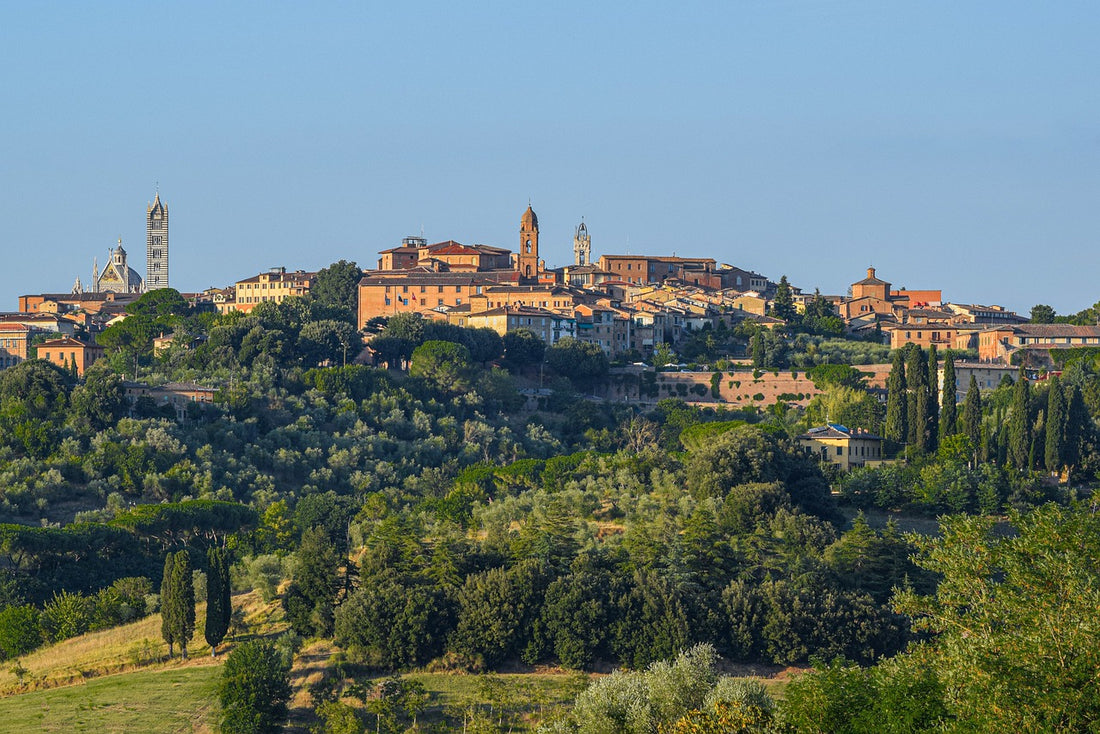
Nannini's proximity to Siena means being an integral part of its traditions, its saints, its culture, and so much more. Traditions like the recipes they use for classic Tuscan desserts, the trials and tribulations of the Palio, and above all its patron saints—a tradition that has been part of Italy since ancient times.

In the city of Siena, the first patron saint, Sant'Ansano, is celebrated on December 1st, and the celebrations for the saint coincide with the beginning of the contrada year. According to tradition, Sant'Ansano brought Christianity and evangelized the city of Siena.
Saint Ansanus in Siena
Saint Ansanus was born in 284 and professed faith in Christ from a very young age. During that period, anyone who spoke of universal love, peace, or worshiped a man who died on the cross was frowned upon, especially since Christians refused to view the emperor as a deity. This led to various persecutions, of which Saint Ansanus was also a victim. It is said that Saint Ansanus was exposed to religion through the matron Maxima and was discovered and denounced by her father.
It is not certain when Saint Ansanus arrived in Siena, but according to devotional legend, it was at the invitation of an angel that the saint headed towards the city of Siena . Saint Ansanus, having arrived in the city of Siena, began to preach the gospel and baptize the first Christians of Siena, so much so that he earned the title of "baptizer of the Sienese".
Because of his religious proselytism, Saint Ansanus was subjected to "the trial by fire and boiling oil," which took place in an ancient Sienese settlement, which took its name from the saint: Fosso di Sant'Ansanus. According to legend, the saint emerged unharmed from the ordeal by fire.
Following this ordeal, Saint Ansanus was locked in a tower on the hill of San Quirico, from which he continued to baptize the faithful. Saint Ansanus emerged from the tower only on December 1, 304, to be taken to Dofana, where he was beheaded.
The remains of Saint Ansano between Siena and Arezzo
In 1108, the bishop of Siena, Gualfredo, urged a group of believers to steal the body of Saint Ansanus , which had been kept in the Diocese of Arezzo for centuries. It is said that there was an armed clash between the Sienese and the Arezzo people; following this clash, the Sienese managed to seize the remains of Saint Ansanus and brought them to Siena , to give the saint a dignified burial in the cathedral.
According to legend, the Porta di San Viene takes its name from the cries of Siena's citizens when they saw the procession carrying the remains of Saint Ansanus arrive in the city. It is said, in fact, that the Sienese began shouting "The Saint is coming, the Saint is coming!" upon sighting the procession. According to other rumors, however, the bishop of Siena, Gualfredo, reached an agreement with the prelate of Arezzo, Gualtiero, to divide the remains of Saint Ansanus. According to this version, the remains of Saint Ansanus were transported to Siena peacefully, while the saint's head remained in Arezzo.

One of the various "passions" surrounding Saint Ansanus depicts the Sienese as saviors. It is said that some criminals attempted to remove the saint's body from the tomb, but were then chased away by the Sienese. After the criminals fled, the Sienese realized that Saint Ansanus' body remained intact—a sign of sanctity—and so they decided to carry it in procession to Siena to lay it to rest in the cathedral.
In 1359, the body of Saint Ansanus was burned by lightning, and what remains of it is located in various places. His head is preserved in a silver reliquary in the Arezzo Cathedral, his right arm is in Siena, his left arm in Dofana, and a finger is in the municipality of Vinci, preserved in the Piave di San Giovanni Battista in Sant'Ansano.
Siena embraces the tradition of the cult of Sant'Ansano in the same way it embraces the tradition of the Palio, the Nannini pastry shop , Piazza del Campo and all the other symbols that bear the name of the city aloft.