

Foiano Carnival: historical and culinary tradition
The Carnival tradition in Italy is widespread and has its roots in Greek and Roman customs of celebrating Dionysus and Saturnalia. The elegant Venice Carnival is certainly known throughout the world, but it is in Tuscany that the oldest and most extravagant celebrations of this festival are found. Accompanying the parades of allegorical floats in Tuscany are not only confetti but also a culinary tradition that has spanned the centuries.
The oldest Carnival in Italy is held in Foiano della Chiana.

Italy is a country rich in history and tradition, and Carnival celebrations are no exception. Thanks to written records, it has been discovered that in Foiano della Chiana, a small town in the province of Arezzo, Carnival has been celebrated since 1539. Unfortunately, from what has been discovered, it's not possible to determine with certainty how the festivities were celebrated. What is known, however, is that even back then, participants would enjoy special sweets called "cenci" along with Vin Santo .
Rags: From Roman Frictilia to Piedmontese Lies
The texts found in Foiano that discuss Carnival also describe culinary traditions and their evolution over time. One thing that hasn't changed, however, is the presence of "cenci," a typical Carnival dessert found throughout Italy. While the tradition of cenci hasn't changed, their name has. If we wanted to order a tray in Lombardy, we'd ask for "le chiacchere," in Piedmont for "le bugie," and in Veneto for "i galani." The Accademia della Crusca has recorded at least 50 variations on the name for this typical dessert. Their first known name, however, dates back to Ancient Rome: "frictilia," which recalls the cake's shape, resembling a piece of cloth. This same parallel inspired the Tuscan term "cencio," which in dialect means a piece of cloth.
How to enjoy cenci at the Foiano Carnival
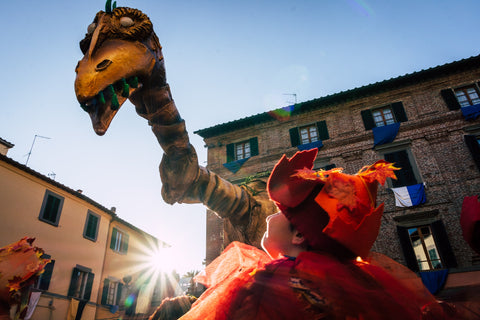
As in 1539, today too, during the parade of allegorical floats at the Foiano Carnival, you can immerse yourself in the culinary traditions typical of the area and the period. At various stations throughout the village, local housewives are busy preparing various dishes live, including cenci. Tradition dictates that they can be cooked either by frying or baking, but the housewives will serve them strictly fried. The only thing you can choose is whether to enjoy them with powdered sugar, granulated sugar, or plain. But if you want to enjoy them at their best, we highly recommend accompanying them with a good glass of Vin Santo.