
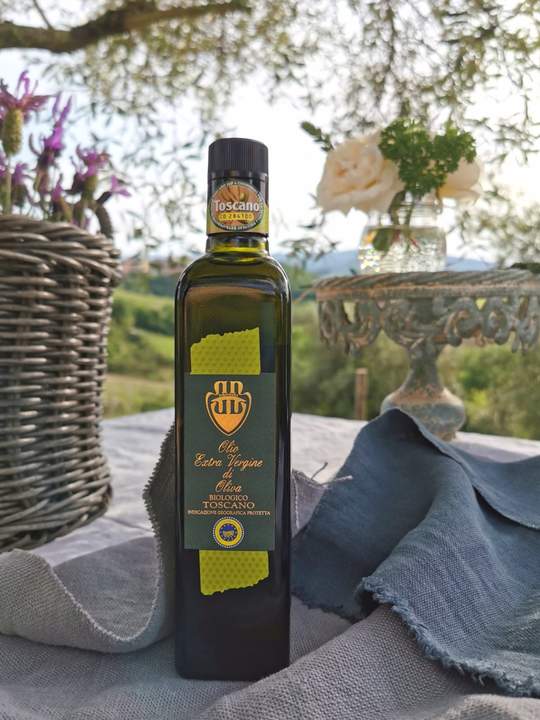
PGI EVO oil: what it means and other excellent products with this label.
PGI, a European guarantee
Italy as a whole, and Tuscany in particular, boasts numerous products among its excellences destined for our tables and those around the world. All items, however, are subject to strict controls that monitor the goods throughout the entire production process and allow them to be accredited with acronyms and brands that add value.
Among the most important is the PGI , or Protected Geographical Indication, an acronym which, according to what is written in paragraph 1 of Article 2 of Regulation (EC) no. 510/2006, indicates a mark of origin that is attributed by the European Union to those agricultural food products for which a certain quality, reputation or other characteristic depends on their geographical origin, and whose production, processing and/or preparation takes place in a specific geographical area .
To obtain the PGI designation, at least one stage of the production process must take place in a specific area. PGI producers must adhere to the strict production rules established in the product specifications, and compliance with these rules is ensured by a specific inspection body. The trademark's colors are yellow and blue. The PGI mark is a European trademark and can be found in all EU member states under a different acronym depending on the local language.
But more specifically, what are these agricultural and food products?
Among the products that can benefit from the PGI mark we find wines , beers, fresh meats and meat-based products such as sausages , cheeses and other types of foods of animal origin including honey, eggs, wool, oils and fats, fish, molluscs, crustaceans and derivatives, spices, cereals and fruit and vegetables, essential oils, pasta, chocolate and bakery, biscuit, confectionery and pastry products, which also include the typical Toscani, Ricciarelli and Panforte .
Italy is the European country with the highest number of PGI foods but we only find one olive oil.
As regards olive oil, that is, 100% Italian extra virgin olive oil , only one has the PGI marking, namely Toscano , which is produced in the provinces of Massa Carrara, Pisa, Livorno, Florence, Pistoia, Prato, Lucca, Grosseto, Arezzo and Siena.
All other olive oils are labeled DOP (Protected Designation of Origin). Olive oil differs from virgin olive oil because the former must be pure and have clearly defined chemical and organoleptic characteristics, while olive oil is a blend of refined oil (obtained using chemicals) and virgin oil.

Tuscany also boasts another record with regards to the PGI brand
The first Italian confectionery product to receive European protection was the Ricciarello, a typical Sienese dessert made with almonds , sugar , and egg whites . Ricciarelli are made with a coarse-grained, marzipan-like paste, worked extensively and enriched with a mixture of candied fruit and vanilla. The resulting paste is baked in the oven and then shaped into small diamonds, slightly curled at the ends. They are shaped like grains of rice, with a rough, cracked surface coated in powdered sugar and placed on a wafer paper.
They can be found in local pastry shops all year round, while families prepare them especially during the Christmas holidays.
Among the Christmas sweets, another Sienese one has been awarded the PGI mark only three years after the Ricciarelli
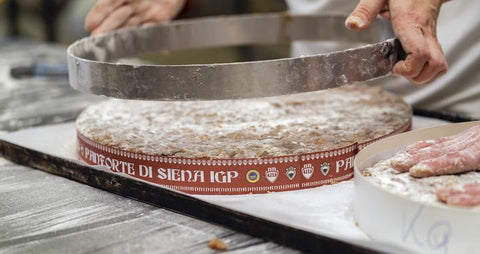
In Siena, when we talk about Ricciarelli, we can't help but mention Panforte , a dessert derived from Panpepato and modified specifically in honor of Queen Margherita, so much so that today it is known and passed down as " Panforte Margherita ." The name panforte derives from the "poor" culture, but before Queen Margherita, it was a dessert consumed especially by the nobility, due to the use of melon pulp, which was very expensive, in its interior.
Sienese tradition holds that the first panforte was made by a nun (Berta) who prepared a sort of focaccia by mixing honey, flour, and candied fruit (orange and melon) with dried fruit (almonds) and many spices such as ginger, cinnamon, nutmeg, etc., elements which are also present in today's recipe with the addition of a sprinkling of icing sugar on top.
But where can you taste all these local delicacies in Siena?
“Every time I come to Siena, even if I'm in a hurry, I can't help but stop by the Nannini pastry shop, because even the air around it feels like home, parties, and grandmothers busy preparing the most succulent delicacies for their children and grandchildren.”
This is just one of the many impressions gathered from patrons of the pastry shop, but I assure you that all those left by Tuscan customers are no different. All of this is a source of pride for the Nannini family , and the certainty of having achieved their goal: safeguarding local flavors and traditions. The Nannini pastry shop boasts a century-old history and has always been committed to offering its customers gastronomic specialties that characterize coffee breaks, brunches, and aperitifs, preserving intact the recipes and preparation methods that have been handed down in Sienese and Tuscan homes for centuries.
Behind each of their products lies care, study, and research into the details that have made the typical products of our culinary tradition so famous and appreciated. This research does not stop only at the exact reproduction of recipes, but also at the scrupulous identification of the raw materials.
Italian heritage to be passed down and safeguarded
PGI products are guarantees of Italian excellence, known and exported throughout the world , not only for their quality but also for the stories and traditions they convey. Behind every product are men and women committed to promoting and rediscovering Italian treasures and culture through the culinary excellence that characterizes it. As consumers, all we can do is recognize the quality and hard work behind these products and help producers make the Italian PGI brand even more widespread and well-known worldwide.